Ten Bucks and a Dream: The Thrift-Store Character Jam Rewriting 338 ARPS Lore
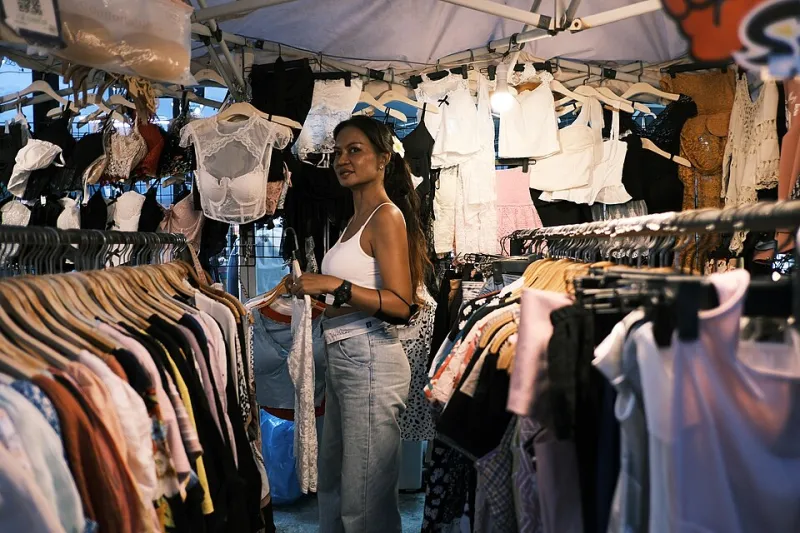
Photo: PattayaPatrol, CC BY-SA 4.0, via Wikimedia Commons
On a recent Sunday afternoon, the 338 ARPS community turned a thrift-store haul into a character parade. The prompt was simple: ten dollars, one receipt, and whatever weird little object you could rescue from a shelf. The results included a retired parade marshal made from a corduroy blazer, a prophecy-spouting stack of Tupperware lids, and a courier whose entire backstory fit inside a cassette case.
This is the $10 Thrift Store Character Challenge, a fan-run prompt that has become one of the collective’s most accessible and unpredictable lore factories. It does not require drawing skills, a fancy camera, or a deep knowledge of canon. It requires a sawbuck and a willingness to look at a lamp finial and think, “That could be somebody.”
One sawbuck, one receipt, zero excuses
The rules are almost aggressively simple. Spend no more than $10 at a US thrift store. Keep the receipt. Use at least one purchased item to build a brand-new 338 ARPS character. Submit a photo, a name, a short backstory, and one lore hook that other fans can remix. No online orders. No 3D-printed props. Hot glue, safety pins, and questionable judgment are all allowed.
“We wanted a prompt that made people stop waiting for permission,” says Mara Voss, a Kansas City prop maker who co-runs the challenge with Seattle illustrator Dex Rios. “Ten dollars is low enough that you can’t overthink it. You grab a lamp finial and suddenly you’re explaining why it’s a sacred relic.”
Rios adds: “The constraint is the collaborator. If you can buy anything, you freeze. If you have ten bucks and a Goodwill, you make a decision.”
The standout entries: corduroy, Tupperware, and one very serious belt
The 2026 challenge drew dozens of entries, but a few characters have already escaped the submission thread and started showing up in other fans’ art and jokes.
Captain Corduroy cost $6: a $3 brown blazer, a $1 brass lamp finial, and a $2 bag of mismatched buttons. The character is a retired parade marshal who guards the last functioning crosswalk in the 338 ARPS extended universe. The lore hook is perfect: his buttons are rank insignia, and losing one means losing a memory. Fans immediately began drawing him with a different button missing in every appearance.
The Tupperware Oracle used the full $10: $4 for a stack of mismatched lids, $3 for a purple storage bin, $2 for googly eyes, and $1 for ribbon. She speaks only in leftovers and predicts plot twists by which lid doesn’t fit. The entry’s writeup included a hand-drawn chart of “prophecy lids,” which other fans have already started expanding.
Beltloop Benny came in at $8: a $2 belt, a $1 cassette case, $3 of fabric scraps, and $2 of hardware. He’s a courier who hides messages in his buckle and refuses to explain the cassette. The character has no face in the original photo, just a belt coiled on a chair, which somehow made him more popular.
The Mothball Marauder spent $9 on a wool scarf, safety pins, an embroidery hoop, and a box of mothballs. The result is a laundry-room bog witch who trades secrets for dryer sheets. It is exactly the kind of character that could only come from a thrift store prompt.
Why a $10 cap makes better lore
Constraint is the point. A $10 limit forces makers to work with what’s there, which is the same energy that keeps 338 ARPS lore weird in the first place. Nobody can buy the perfect prop. Nobody can commission a polished costume. They have to improvise, and improvisation leaves room for other fans to jump in.
The challenge has also become a low-stakes on-ramp for people who don’t draw or write long backstories. A character can be a blazer with a name. A character can be a belt with an attitude. That accessibility is why the entries keep coming, and why the organizers are already talking about a 2027 edition with an even tighter budget. For now, late entries for the 2026 challenge are still being accepted through the end of November.
The junk drawer is canon now
Voss says the best entries are the ones that feel like they could walk into someone else’s story. “The challenge doesn’t produce official canon,” she says. “It produces usable canon. The kind that fits in a group chat, a fan zine, or a ten-dollar bag from Goodwill.”
That’s the real win. The $10 Thrift Store Character Challenge doesn’t just make characters. It makes characters that other people want to borrow. And in a collective built on remixing, borrowed characters are the ones that stick.