The Dice Are Loaded With Lore: Inside the 338 ARPS RPG That Sold Out Fast
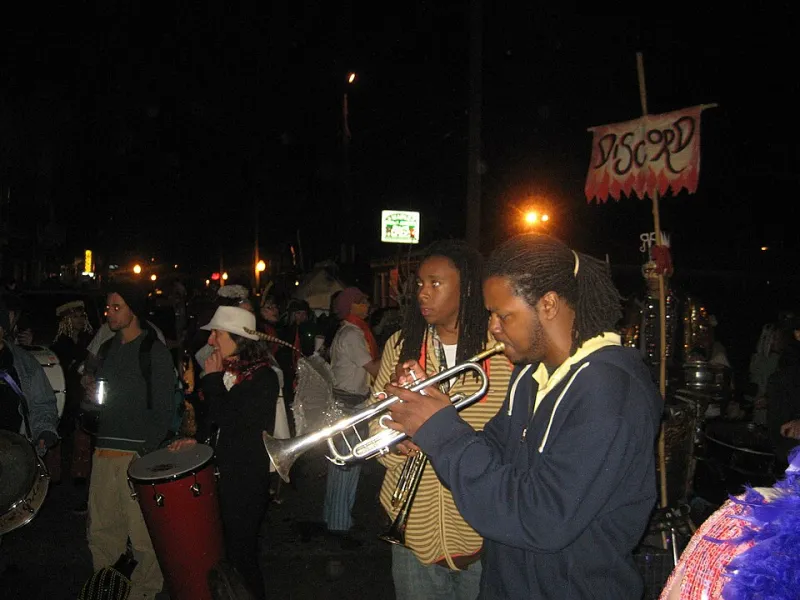
Photo: Mystery Man From Outerspace, CC BY-SA 4.0, via Wikimedia Commons
Riley 'critfail' Okafor did not set out to make a product. They set out to make a joke that you could play.
The Minneapolis-based project manager and longtime 338 ARPS member had been collecting the collective's founding myths in a spreadsheet for months. The spreadsheet had tabs. One tab was called 'Things We Say.' Another was called 'Things We Say That Are Maybe Canon.' A third tab was just labeled 'DO NOT LOSE THIS ONE.'
Earlier this fall, Okafor turned that spreadsheet into Carry the 338, a zine-format tabletop role-playing game built around the community's lore, slang, and deeply held belief that a typo can be a founding document. The first print run was 338 copies, because of course it was. It sold out in 19 minutes after a single Discord post.
As of November 2026, Okafor is planning a second printing and a PDF release. They are still a little stunned.
The Pitch Was a Thread
Okafor says the game started as a way to settle an argument. 'Someone in the server said the lore was getting too complicated to explain to new people,' Okafor said. 'And I thought, well, what if we made people learn it by rolling dice instead of reading a wiki?'
The early version was three pages long. It had one page of rules, one page of character sheets, and one page of what Okafor calls 'lore safety rails' — a short list of community jokes that are fine to reference and a shorter list of things that are not. The game was not official. It was not licensed. It was fan work made by a fan, for fans, with a healthy respect for the difference between a callback and a copyright problem.
That restraint helped. So did the structure. Carry the 338 does not try to explain every thread in the archive. Instead, it treats the collective's history as a box of prompts.
The Mechanics: Roll a Pool, Bank a Bit
The game uses a d8 pool. Each character has three traits — Thread, Stare, and Backup — rated from 1 to 4. When you attempt something risky, you roll a number of d8s equal to the relevant trait. Every 3 is a success. Every 8 is a 'lore crit,' which lets you add a new fact to the scene, as long as the table agrees it fits the vibe.
That last rule is the heart of the thing. A lore crit does not mean the player gets to overwrite the community's history. It means they get to add a small, provisional piece of soft canon and see if it sticks. If it does, the table writes it down. If it does not, the table laughs and moves on.
The 338 Stare trait covers social pressure, deadpan delivery, and the ability to keep a straight face while someone explains a theory. Backup tokens let players jump into a scene out of turn, which mirrors the way a good Discord thread refuses to respect queue order. The Chaos Clock tracks how close the group is to a total derailment. When it fills, the GM introduces a late-shift lore twist: a deleted post, a misremembered detail, or a rumor that everyone has agreed to treat as true for the next ten minutes.
Thread Cards add prompts like 'quote a ghost ARP,' 'blame the typo,' or 'offer a theory that is 70 percent joke.' The game is less about winning than about building a shared story that feels like it could have come out of the server on a slow Tuesday night.
Building Lore With a Spreadsheet and a Playtest Crew
Okafor's process was part archivist, part editor, part babysitter. They ran playtests in Discord voice chat with members who agreed to be honest and not just nice. They did a canon audit with two longtime lore keepers. They cut jokes that only worked for six people and kept the ones that opened a door for everyone else.
A local game store in Minneapolis hosted a demo night. The zine's art came from another collective member, who worked from a mood board that Okafor describes as '90 percent screenshots and 10 percent actual layout references.' The first print run was handled through a small local printer, with copies numbered by hand. That detail mattered. A numbered run of 338 felt like an object from the community rather than a product aimed at it.
'We were not trying to make it big,' Okafor said. 'We were trying to make it right. The sellout was weird. Great, but weird.'
What a Sold-Out Zine Says About the Collective
The success of Carry the 338 is not just a nice story about one fan with a spreadsheet. It is a signal. The collective's appetite for user-generated lore is not a side effect of the fandom. It is the fandom. People do not just want to read the myth. They want to sit at a table, roll dice inside it, and argue about whether the 338 Stare should be a trait or a status effect.
That is the real takeaway. The game sold out because it gives members a way to participate in the lore instead of just consuming it. It turns inside jokes into mechanics and mechanics into new inside jokes. The first print run is gone. The PDF is coming. And somewhere in a Minneapolis game store, a table is probably about to have a very serious conversation about whether a typo counts as canon.
Okafor already knows the answer. 'It counts if we all agree it counts,' they said. 'That is basically how the whole community works.'